Newton's Third Law: Bridging Science, Society, and Sustainability in the IB Curriculum
- Adnan Naseer
- Research
- July 17, 2024
Table of Contents
Newton’s Third Law: Bridging Science, Society, and Sustainability in the IB Curriculum
In the dynamic classrooms of the International Baccalaureate (IB) program, students are not just learning scientific principles; they are exploring the intricate connections between these principles and the world around them. A prime example of this interdisciplinary approach is the study of Newton’s Third Law of Motion: “For every action, there is an equal and opposite reaction.” This simple yet profound statement serves as a gateway to understanding the interconnectedness of science, society, and sustainability.
Unveiling the Breadth of Newton’s Third Law
Newton’s Third Law is not confined to physics textbooks and laboratory experiments. Within the IB curriculum, this fundamental law is integrated to engage students in exploring its wide-ranging applications across various scientific and real-world contexts. From engineering and biomechanics to environmental science and socio-economic systems, the principle of action and reaction is a powerful tool for understanding the world.
Students delve into the relevance of Newton’s Third Law in diverse fields. They investigate how it governs the mechanics of sports, the principles of ecological systems, and even the dynamics of socio-economic interactions. This exploration is not just about learning a scientific law; it is about appreciating its universality and its impact on various aspects of life and society.
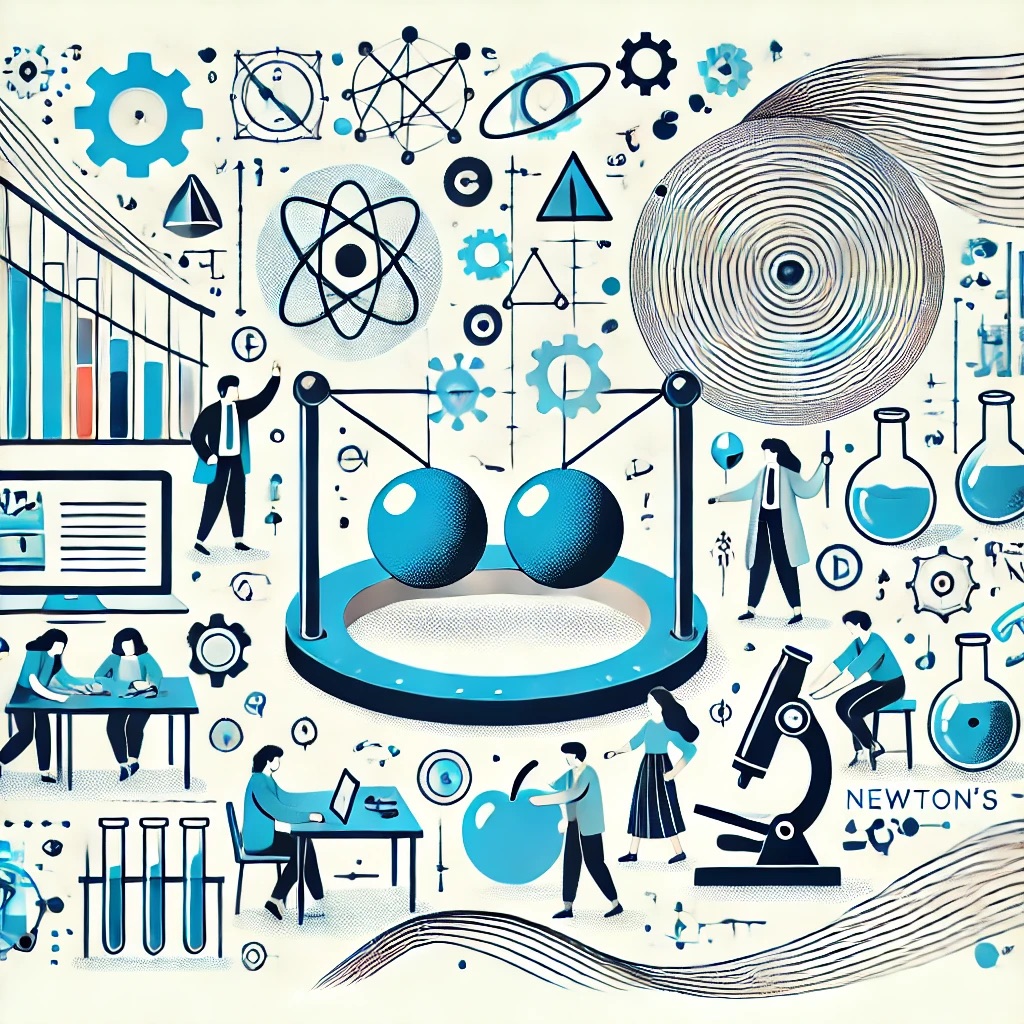
IB students exploring the applications of Newton's Third Law in various fields.
Fostering Global-Mindedness and Ethical Reasoning
The IB’s emphasis on global-mindedness and interconnected learning shines through in the study of Newton’s Third Law. By understanding this law, students are encouraged to think beyond the classroom and consider its implications in the wider world. They explore how advancements in transportation systems, derived from the action-reaction principle, can lead to significant societal impacts.
For instance, students examine the development of environmentally friendly transportation technologies. These innovations not only reflect technological progress but also have the potential to transform economies and reduce environmental footprints globally. This inquiry instills a sense of responsibility and ethical consideration, aligning with the IB’s mission to develop inquiring, knowledgeable, and caring young people.
Connecting Physics to Global Sustainability
Muhammad, an IB student, exemplifies how inquiry-based learning connects to international mindedness. His exploration of Newton’s Third Law highlights its societal impact, particularly in transportation advancements. By understanding the action-reaction principle, Muhammad investigates sustainable transport technologies that promise economic growth and job creation while minimizing environmental impacts.
This exploration within the IB framework fosters a global perspective. It prepares students to balance innovation with ecological and economic health, embodying the IB’s vision of creating responsible, globally-aware citizens.
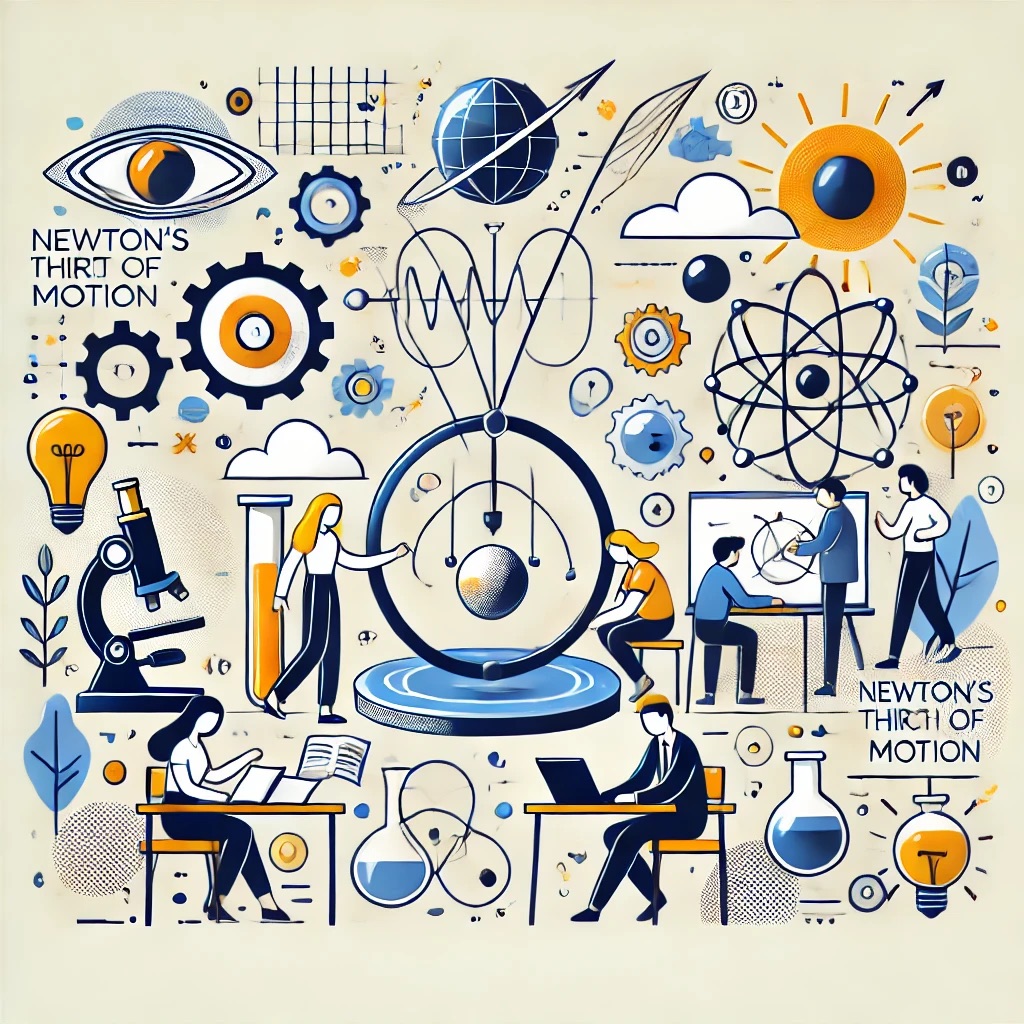
Exploring the societal impacts of Newton's Third Law on sustainable transportation.
The Power of Inquiry-Based Learning
Through the lens of Newton’s Third Law, students in the IB program develop critical skills in analyzing and interpreting interactions in the physical world. This process mirrors the interplay of diverse cultures and perspectives, fostering a global scientific perspective that parallels an understanding of varied human experiences.
The curriculum, using Newton’s Third Law as a foundation, enhances students’ abilities to hypothesize, experiment, and conclude. This scientific approach translates into forming opinions, making decisions, and reasoning ethically. By investigating the law’s manifestations in technology and nature, students engage with the empirical ’texts’ of the universe, learning to communicate complex ideas and innovate for a sustainable future.
Final Thoughts
The study of Newton’s Third Law within the IB curriculum is more than a scientific inquiry; it is a journey into understanding the interconnectedness of our world. By bridging science, society, and sustainability, the IB fosters a holistic approach to education. This method prepares students to become knowledgeable, open-minded, and principled individuals ready to tackle global challenges with a scientific and ethical mindset.
Join us in exploring the profound connections between science and society, and discover how the IB program empowers students to make a positive impact on the world.